

Section 1
Preview this deck
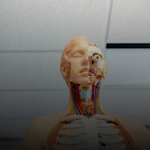
A muscle acting as an antagonist of the muscle at Sternocleidomastoid muscle would be _____________. A. latissimus dorsi B. splenius capitis C. rhomboid minor D. trapezius
Front

| 5 | 0 | ||
| 4 | 0 | ||
| 3 | 0 | ||
| 2 | 0 | ||
| 1 | 0 |
Active users
0
All-time users
0
Favorites
0
Last updated
6 years ago
Date created
Mar 1, 2020
Cards (74)
Section 1
(50 cards)
A muscle acting as an antagonist of the muscle at Sternocleidomastoid muscle would be _____________. A. latissimus dorsi B. splenius capitis C. rhomboid minor D. trapezius
B
Which of the following best describes the type of connective tissue found in ligaments? A. Adipose B. Loose areolar C. Fibrocartilage D. Dense regular E. Dense irregular
D
Which of the following best describes the cell type that digests the extracellular matrix of bone? A. Chondrocyte B. Osteogenic C. Osteoblast D. Osteocyte E. Osteoclast
E
Which of the following tissues are best described as avascular? A. Hyaline cartilage B. Dense irregular connective tissue C. Dense regular connective tissue D. Loose connective tissue E. Compact bone
A
Which is most abundant class in plasma membrane lipid? A. Cholesterol B. Glycolipid C. Phospholipid D. Glycoprotein E. Triglyceride
C
Your biceps brachii works as a ______ class lever system. A. first B. second C. third D. fourth
C
The bipeps brachii muscle flexes the forearm at the elbow and the triceps brachii muscle extends the forearm at the elbow. Which of the following best describes the relationship between these muscles when flexing your forearm? A. The biceps brachii is the prime mover and the triceps brachii is the fixator. B. The biceps brachii is the synergist and the triceps brachii is the fixator. C. The biceps brachii is the fixator and the triceps brachii is the prime mover. D. The biceps brachii is the prime mover and the triceps brachii is the synergist. E. The bipceps brachii is the prime mover and the triceps brachii is the antagonist.
E
When you look at how muscles are named, where does the "deltoid" name come from? A. location of muscle B. principle action of muscle C. direction of muscle fibers D. shape of muscle
D
Which of the following best describes the cell type most active in bony callus formation following a fracture? A. Chondroblasts B. Osteoblasts C. Osteocytes D. Chondrocytes E. Osteoclasts
B
Which of the following best describes the glenohumeral joint? A. Hinge B. Ball & socket C. Saddle D. Pivot E. Condyloid
B
Which of the following best describes the cell type of the epidermis that functions in an immune response? A. Keratinocyte B. Langerhans cell C. Mast cell D. Melanocyte E. Merkel cell
B
Which of the following best describes the structures that allow communication between osteocytes? A. Volkmann's canals B. Canaliculi C. Interstitial lamellae D. Haversian canals E. Nutrient foramen
B
Which is the following statements about superficial fascia is considered correct ? A. it is composed primarily of dense connective tissue. B. it provides a route for lymphatic and blood vessels as well as nerves to enter muscles. C. it is found between the skeletal muscles and the bones. D. it stores most of the body's proteins. E. it promotes heat loss.
B
The portion of the skeletal muscle that attaches to a stationary bone is called the: A. insertion B. origin C. belly D. sarcomere
B
A person is diagnosed with carpal tunnel syndrome, a condition that results from compression of the median nerve at the wrist. Which of the following best describes the muscles most likely affected in this condition? A. Dorsal interossei B. Hypothenar C. Extensor pollicis longus D. Palmar interossei E. Thenar
E
Which of the following best describes the type of vertebrae characterized by the presence of demifacets? A. Sacral B. Lumbar C. Cervical D. Thoracic E. Coccygeal
D
An accident victim in the supine position with the hip and knee extended is asked to abduct the lower limb against resistance provided by the physician. This exercise test which of the following muscles ? A. semitendinosus B. gluteus medius C. pectineus D. gracilis E. semimembranosus
B
An 23-year-old woman is asked to abduct the lower limb against resistance provided by the physician. Which of the following muscles is tested in this exercise? A. Semitendinosus B. Pectineus C. Gracilis D. Gluteus medius E. Semimembranosus
D
Which muscle do you use the most when smiling? A. buccinator B. zygomaticus major C. mentalis D. depressor anguli oris
B
Which of these muscles is not associated with breathing (alterations of thoracic volume)? A. external intercostals B. internal intercostals C. pectoralis minor D. latissiumus dorsi
D
Which of the following best describes the type of cell junction that functions to attach an epithelial cell to the basement membrane? A. Adherens junction B. Desmosome C. Gap junction D. Hemidesmosome E. Tight junction
D
A patient can abduct her arm no further than the 15 degree position . Which of the following muscles is most likely affected? A. Subscapularis B. Rhomboid minor C. Teres minor D. Supraspinatus E. Deltoid
E
Which muscles flex the cervical part of your vertebral column when you contract them both together? A. pectoralis major B. sternocleidomastoid C. splenius capitis D. frontalis
B
Which of the following best describes the type of cell that functions to secrete the fibers and ground substance of the extracellular matrix? A. Adipocyte B. Fibroblast C. Macrophage D. Mast cell E. Plasma cell
B
Which of the following best describes a sesamoid bone? A. Humerus B. Patella C. Scaphoid D. Sternum E. Vertebrae
B
All of the following flex the forearm except: A. biceps brachii B. brachialis C. anconeus D. brachioradialis
C
Which of these muscles is not associated with movements of the pectoral girdle? A. latissimus dorsi B. rhomboid major C. pectoralis major D. trapezius
C
Which of these muscles does not contribute to the rotator cuff? A. supraspinatus B. scalenes C. infraspinatus D. teres minor
B
Which of the following best describes a type of passive transport? A. Exocytosis B. Pinocytosis C. Phagocytosis D. Facilitated diffusion E. Receptor-mediated endocytosis
D
When you look to your left, which extrinsic eye muscle contracts in your right eye? A. superior rectus B. inferior rectus C. lateral rectus D. medial rectus
D
Which of the following muscles is not part of the rotator cuff group? A. Supraspinatus B. Teres minor C. Teres major D. Infraspinatus E. Subscapularis
C
A complete tear to the Achilles tendon would result in the inability to perform which of the following motions ? A. dorsiflex the foot B. plantar flex the foot C. evert the foot D. invert the foot
B
The primary arm muscle used when doing a push-up would be the? A. triceps brachii B. biceps brachii C. brachialis D. deltoid
A
Which of the following best describes the connective tissue covering a muscle fascicle? A. Perimysium B. Epimysium C. Endosteum D. Endomysium E. Perichondrium
A
When you bend over to pick up something, then try to straighten your back, what are the primary extensors of your vertebral column? A. latissimus dorsi B. rectus abdominis C. erector spinae group D. gluteus maximus
C
Which of the following best describes the muscle that closes and protrudes the lips? A. Levator labii superioris B. Mentalis C. Orbicularis oris D. Orbicularis oculi E. Depressor anguli oris
C
Which of the following actions would you ask a patient to perform in order to test the function of the trapezius muscle? A. Push against a wall with both hands B. Adduct the arm against resistance C. Abduct the arm fully D. Flex the arm fully E. Shrug the shoulder
E
Which is the most superficial layer of lateral abdominal muscles? A. external oblique B. rectus abdominis C. internal oblique D. transversus abdominis
A
Which of the following bones are not found in the proximal row of carpal bones ? A. pisiform B. capitate C. lunate D. triquetral E. scaphoid
B
Which of the following best describes the organelle that functions in the generation of adenosine triphosphate? A. Endoplasmic reticulum B. Golgi apparatus C. Lysosome D. Mitochondria E. Peroxisome
D
Which of the following best describes the cytoskeletal component associated with desmosomes? A. Actin filament B. Intermediate filament C. Microfilament D. Microtubule E. Centriole
B
Which of the following best describes the number of phalanges on one hand? A. 7 B. 8 C. 15 D. 5 E. 14
E
Which of the following is not a function of bone? A. Blood cell production B. Protect brain and spinal cord C. Initiate movement D. Store calcium E. Support soft tissues
C
Which of the following best describes the type of epithelial tissue lining blood vessels? A. Simple cuboidal B. Simple squamous C. Stratified cuboidal D. Simple columnar E. Stratified squamous - nonkeratinized
B
The _________ muscle's name means "chewer". Its function is to elevate the mandible. A. masseter B. buccinator C. mentalis D. platysma
A
Which of following best describes the muscle that everts the foot? A. Fibularis longus B. Tibialis anterior C. Flexor hallucis longus D. Flexor digitorium longus E. Tibialis posterior
A
Which of the following best describes the skin gland that produces a holocrine secretion linked to acne? A. Apocrine B. Ceruminous C. Eccrine D. Sebaceous E. Sudoriferous
D
Which of the following best describes the long, cylindrical, main region of a long bone? A. Spongy bone B. Compact bone C. Diaphysis D. Metaphysis E. Epiphysis
C
Which of the following statements about the gastronemius and soleus muscles is considered incorrect ? A. Dorsiflex the ankle joint. B. Found in the posterior compartment of the leg. C. Plantar flex the ankle joint. D. Insert via the calcaneal tendon. E. Innervated by the tibial nerve.
A
Superficial muscles on the anterior surface of the forearm may act as: A. flexors of the wrist B. extensors of the hand C. adductors of the forearm D. abductors of the forearm
A
Section 2
(24 cards)